Menstruation
#biology #science
Menstruation is a process that causes shedding of the uterus monthly through the
vagina.
Hormones
Depending on which stage on menstruation, the pituitary gland and ovaries will release different levels of hormones.
Figure A shows a graph of the hormonal levels based on the stage of menstruation.
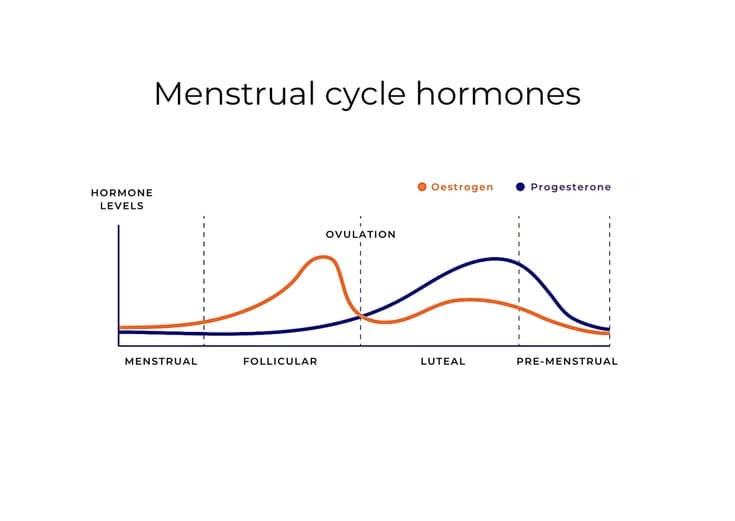
These hormones cause the uterus lining thickening so if an egg is fertilized it can implant into the lining. They also cause ovaries to release an egg into the fallopian tubes, (ovulation) if it is not fertilized by a sperm, the egg begins to break down into the menstrual blood (menstrual)
Phases of Menstruation
| Phase | Description | Day |
|---|---|---|
| Menstrual | Lining of the uterus sheds though the vagina if pregnancy hasn't occured. | 1 to 3-7 |
| Follicular | In this phase, estrogen rises and causes the uterus lining to thicken. Within days 10-14 a fully matured egg will produce. | 1 to 14 |
| Ovulation | A sudden increase in the lutenising hormone forces the ovary to release the egg to be fertilized. | 14 |
| Lutual | The egg leaves the ovary to travel within the fallopian tubes. | 14 to 28 |
Symptoms
The symptoms and intensity can vary but these are the most reported symptoms in the process:
- Abdominal and/or back pain
- Insomnia
- Mood swings
- Cramps in the waist area
- Headaches
- Food cravings
- Bloating It is more common for someone in their teens to have heavier anand longer periods whilst people in their 40s or 50s are likely to have lighter periods.
Finally a finished article everyone clap
